Resilience Under Pressure: Strengthening Emergency Systems, Protecting Civilians, and Preparing for Modern Threats

Written by Eileen Inagaki
Building Resilient Supply Chains for Disaster Response
According to the Los Angeles County Emergency Management Department1, partnerships have been established to coordinate six critical sectors essential during disasters: food, medical goods, pharmaceuticals, water, fuel, and transportation. These sectors form the foundation of emergency response and recovery operations. Strengthening partnerships within North America, particularly for oil and fuel supply chains, could help maintain operations during major disruptions. Organizations such as the American Red Cross and the Federal Emergency Management Agency support logistics and assist in distributing critical supplies2.
When Domestic Capacity Fails: The Need for Global Coordination
However, if a nationwide disaster overwhelmed domestic resources, international coordination would likely become necessary. Expanding partnerships beyond the United States could therefore strengthen resilience during large-scale emergencies.
Civilian Impact in Modern Conflict Zones
Civilian populations frequently experience the most severe consequences of armed conflict, including increased mortality, injury, and displacement. In many conflicts, civilian casualties can rival or exceed those of combatants. While some casualties occur as unintended collateral damage, harm to civilians may also be used strategically to exert political pressure or gain tactical advantage.
Assessing civilian harm is complicated by the challenge of defining who qualifies as a combatant. During the Obama administration, U.S. policy classified males aged sixteen and older within a drone strike zone as combatants unless evidence proved otherwise3. This policy reflected the difficulty of distinguishing civilians from fighters in modern conflicts, where militants often do not wear identifiable uniforms. As a result, casualty classifications may be ambiguous, complicating accountability and the accuracy of official reporting.
Hidden Casualties: Infrastructure Collapse and Long-Term Suffering
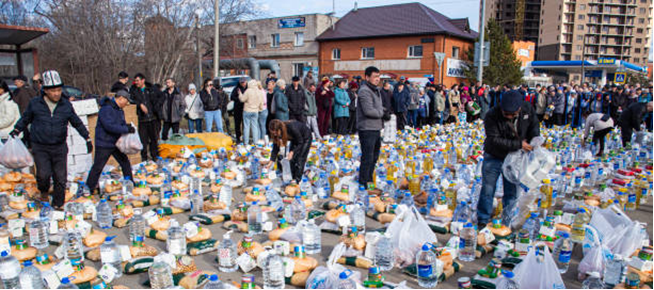
Beyond the immediate destruction caused by military strikes, armed conflict also produces significant indirect casualties. Damage to infrastructure, economic disruption, and the collapse of healthcare systems can create long-term humanitarian crises characterized by poverty, resource shortages, and limited medical care.
The Mental Health Crisis in Conflict-Affected Populations
These conditions contribute to major mental health challenges. Approximately one in five individuals living in conflict-affected settings experiences a mental health disorder, including depression, anxiety, post-traumatic stress disorder (PTSD), bipolar disorder, or schizophrenia4. The psychological effects of war can persist across generations, as children of survivors often show higher rates of PTSD and anxiety.
Preparedness planning should therefore include mental health resources alongside traditional emergency services. Maintaining psychologists or mental health specialists on standby could help communities respond to increased demand during crises. Individual preparedness is also critical, including maintaining emergency supplies of food and water so households can sustain themselves during the early stages of a disaster before assistance arrives.
Community-Level Preparedness and Local Resilience Efforts
Local initiatives in the Los Angeles region also support resilience. Efforts to improve water quality and water security aim to strengthen the reliability of this essential resource. Residents can access preparedness information through ReadyLA County, while community programs such as the Community Emergency Response Team (CERT), hosted by the Los Angeles County Fire Department and developed through the Federal Emergency Management Agency, train volunteers to assist with disaster preparedness, response, and recovery5.
Gaps in Preparedness: Terrorism, Cyber Threats, and Emerging Risks
Preparedness gaps remain, particularly regarding terrorism and infrastructure protection. The City of Pasadena Fire Department6 maintains a terrorism preparedness webpage, but broader guidance on hostile threats, cybersecurity, and drone attacks is limited. Policies like Los Angeles County Emergency Medical Services Agency’s “15 ’til 50” mass casualty guidance7 and the County Operational Area Emergency Operations Plan1 require updates to incorporate emerging threats and lessons learned from recent disasters. Coordination with the Department of Homeland Security8 and Cybersecurity and Infrastructure Security Agency9 is critical as cyberattacks targeting hospitals, power grids, and communications increase.
Energy Vulnerability and Infrastructure Resilience
Energy infrastructure may represent one of the region’s most significant vulnerabilities. According to the Los Angeles Department of Water and Power, approximately 41 percent of the region’s electricity comes from renewable energy sources10. Expanding residential solar systems or backup power solutions could help households maintain limited electricity during outages and improve community resilience.
Coordinating Response: The Role of Government and Nonprofit Networks
For large-scale emergencies, the American Red Cross provides shelter, food, and medical support2, while the Emergency Network Los Angeles coordinates nonprofit and community organizations that deliver services ranging from food distribution to mental health care5. At the state level, the California Governor’s Office of Emergency Services11 coordinates mutual aid and resource sharing across jurisdictions to support disaster response.
References:
City of Los Angeles Emergency Management Department. (n.d.). Supply chain resilience initiative. https://emergency.lacity.gov/supply-chain
American Red Cross. (n.d.). Emergency disaster response services. American Red Cross. https://www.redcross.org/local/california/los-angeles/about-us/our-work/emergency-disaster-response-services.html
Council on Foreign Relations. (2024, October 3). The civilian consequences of conflict. CFR Education. https://education.cfr.org/learn/reading/civilian-consequences-conflict
Charlson, F. J., van Ommeren, M., Flaxman, A. D., Cornett, J., Whiteford, H. A., & Sexena, S. (2019). New WHO prevalence estimates of mental disorders in conflict settings: A systematic review and meta-analysis. The Lancet, 294 (10194), 240-248. https://www.thelancet.com/journals/lancet/article/PIIS0140-6736(19)30934-1/fulltext
Emergency Network Los Angeles (n.d.). About. https://enla.org/about
City of Pasadena Fire Department. (n.d.). Terrorism. City of Pasadena. https://www.cityofpasadena.net/fire/disaster-preparedness/terrorism/
Los Angeles County Emergency Medical Services Agency. (2016, January). 15 ‘til 50 mass causality incident guide for healthcare entities. Los Angeles County Department of Health Services. https://file.lacounty.gov/SDSInter/dhs/1057818_15-til-50-MCI-Guide.pdf
Department of Homeland Security. (2024). Emerging threats and technology guidance for local preparedness. https://www.dhs.gov
Cybersecurity and Infrastructure Security Agency. (2025). Critical infrastructure security and resilience resources. https://www.cisa.gov
Los Angeles Department of Water and Power. (n.d.). Power system. https://www.ladwp.com/who-we-are/power-system
California Governor’s Office of Emergency Services. (n.d.). About Cal OES. https://www.caloes.ca.gov/cal-oes/about-cal-oes/


Comments